Mary Antin's Washington's Birthday poem
The Captain and Ann BarbaraMary Antin's Washington's Birthday poem marks the moment when Mary Antin turned the language of American patriotism into a public claim on American life. Composed for a Washington celebration at her Chelsea school, the poem was an arduous exercise in English, a nervous classroom performance, and eventually a published piece in the Boston Herald. Its importance lies less in its literary polish than in what the act made visible: a girl born in Polotzk, granddaughter of Raphael the Russian, could use the adopted country's language to praise George Washington, address her Fellow Citizens, and imagine herself as both author and citizen.
Causes and Background
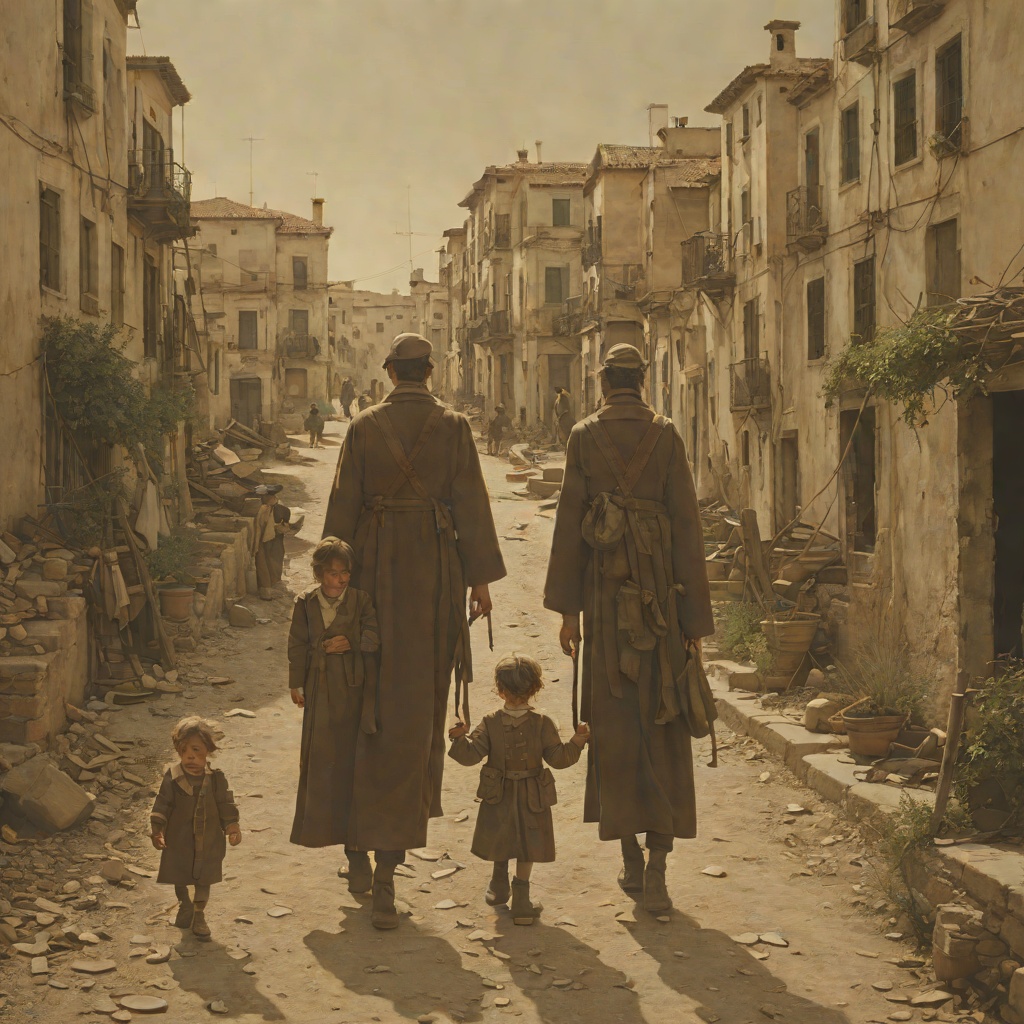
The poem grew out of the radical contrast between Mary Antin's Russian childhood and her reception of America. In Polotzk, the Romanoff banner had represented bondage rather than national belonging; the military uniform symbolized tyranny to Jewish children, and no shared country or flag offered them an object of patriotic love. In America, by contrast, Mary encountered public institutions, schoolteachers, streets illuminated through the night, and the promise that education could open a future unavailable to her parents. Her father especially treated schooling as the route by which his children might enter the intellectual life he had been denied. He led the children to school with a heart full of longing and hope, understanding that their education could become his own advance by proxy.
Mary's readiness to write about Washington was therefore inseparable from her first experiences of American schooling. On entering the public school, she felt that years of waiting, the journey from Russia, and her ambitions had converged in a single morning. Promotion to grammar school intensified that exhilaration: carrying a large geography book became a badge of scholarship, and knowing English and writing poetry seemed to place her above the cousin whose studenthood she had once envied in Vitebsk. The poem emerged from this accumulation of cultural and institutional confidence. It was not merely an assignment; it was the literary form taken by her discovery that learning could make a previously excluded child visible.
Composition and School Performance
Mary described the composition as an ordeal rather than a spontaneous display of verbal mastery. She had been acquainted with English for less than two years and was attempting to express abstract ideas such as tyranny, freedom, and justice. She searched the dictionary for the polysyllabic vocabulary that patriotic verse seemed to require and struggled to find rhymes for words that were still new in her mind. Even Washington's name presented a formal obstacle, since only “Washington” rhymed with “Washington.” The effort was physically and spiritually exhausting, yet she could not rest until the sentiments in her heart had been proclaimed.
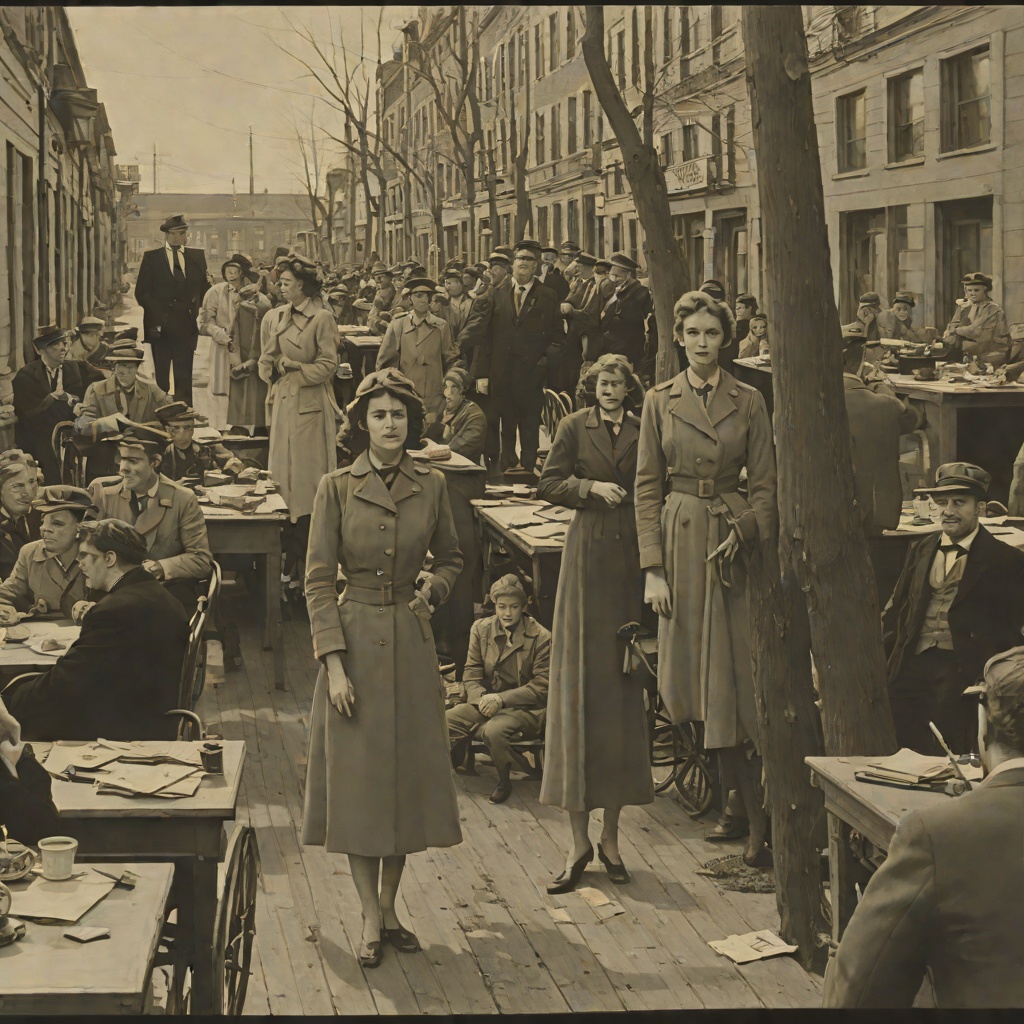
Her father read the finished poem with trembling hands and misted eyes, while Miss Dwight expressed astonishment, kindness, and curiosity about the work. When Miss Dwight asked Mary to recite it before the class, Mary readily agreed because refusing an opportunity to explain her feelings about George Washington was impossible for her. The performance placed a frail, conspicuously immigrant-looking child before roughly forty classmates. Thin and pale, dressed in a red-and-green plaid frock that she disliked, with faulty pronunciation and a flat declamation, she nevertheless stood with the courage of conviction. The awkward appearance and imperfect delivery sharpened rather than weakened the scene's meaning: the performance was a declaration made by someone who did not yet possess the outward ease of an established American.
The classmates treated the recitation seriously. Even the bad boys listened attentively as Mary delivered her long poem stanza by stanza, her solemn demeanor lending the inflated language an authority beyond its technical quality. In retrospect, she could recognize the impossible meters, grandiose phrases, and verbose repetitions. At the time, however, the poem's value was not exhausted by literary judgment. Through it she told her classmates what Washington had done for their country, for the country she had adopted, and for herself.
Publication and Family Reception
After the school celebration, Mary carried the poem to the Boston Herald offices on Washington Street. She approached the newspaper as an inexperienced but confident author, and the first editor she addressed accepted the manuscript, read it quickly, praised it, asked questions, and promised prompt publication. During the interview, the editor gathered biographical material from her, which later became a flattering sketch accompanying the poem. Mary left feeling that she and the editor stood in a friendly comradeship, and she imagined that the crowds studying the bulletin boards would soon know her name.
When the issue arrived, the household searched through the paper together. The poem was not on the front page but occupied a substantial space in the middle of the sheet, introduced by the biographical account of its author. Seeing her name at the bottom made the work appear to Mary like “real poetry,” detached from the familiar fact that she herself had written it. The publication converted a school performance into a printed public identity. Her earlier story about “Snow” had put her name into a school journal; the Washington poem now carried it into the wider civic world of Boston.
Mary's father responded with extravagant pride. He emptied the change from the cash drawer, bought as many copies of the Herald as he could find, and distributed them to friends, relatives, acquaintances, and even some people who could not read. For weeks he carried a clipping in his breast pocket and introduced it into conversation whenever possible. The clipping joined the letters Mary had once sent him from Polotzk as an object of parental treasure. His action also dramatized the family's collective investment in her education: as Mr. Rosenblum later understood, immigrant families might borrow, beg, go without, or incur debt to keep a promising child in school, treating intellectual possibility as an investment in an opulent future.
Civic Belonging and Performance
The poem's public life reveals Mary Antin performing an American identity before several audiences at once. At school she faced classmates who were already socially authorized to call themselves Americans; at the newspaper office she presented herself as an author; in the published sketch she became a recognizable public figure; and through her father's circulation of the paper she became a source of communal pride among immigrant neighbors. The same poem thus moved through educational, journalistic, familial, and ethnic networks, each assigning a different value to her accomplishment.
Mary's patriotism was not casual or inherited. It answered the political emptiness of her Russian childhood and the intensity of her entrance into American institutions. She understood naturalization among Russian Jews as potentially more than America's adoption of the immigrant: it could also mean the immigrant's adoption of America. Her Washington poem gave that reciprocal process a ceremonial voice. She did not simply admire a national hero from a distance; she used the hero's commemoration to announce that the national story now included her aspirations.
The poem also belongs to a larger pattern of public self-presentation. Mary took pride in being seen carrying books, in possessing the signs of scholarship, and in having access to institutions such as the Boston Public Library, which she imagined as her palace because it was built by the people and free to all. Her literary ambition depended on this same transformation of access into possession. The school, the library, the newspaper, and the celebration provided stages on which an immigrant child could rehearse and receive an American self.
Aftermath and Significance
The immediate result was recognition: Mary gained the admiration of her schoolmates, the affectionate astonishment of her teachers, and the intense pride of her family. Yet the poem's deeper consequence was conceptual. It allowed Mary to experience literary authorship and civic belonging as mutually reinforcing achievements. By writing in English about Washington, she demonstrated that the language and symbols of the new country could be learned, inhabited, and reshaped by someone whose earliest memories belonged to Polotzk.
The episode also preserves a tension between aspiration and self-consciousness. Mary later discarded her own copy because she could laugh at its technical deficiencies, while Miss Dwight preserved another copy for the sake of what the young writer had struggled to express. That contrast separates the poem as an artifact from the poem as an act. Its lasting force comes from the labor behind its diction, the courage behind its recitation, and the historical distance crossed before a Russian Jewish girl could stand before her classmates and speak for “our country.”